
Call us now:
86-22-8834 5196
LIFTCHEM-UV Curing Raw Materials, Pharmaceutical Intermediates
2,2,4-Trimethyl-1,3-pentanediol (Lica TMPD): A Comprehensive Overview of a Versatile Diol
1. Overview
2,2,4-Trimethyl-1,3-pentanediol, commonly abbreviated as Lica TMPD, is a significant aliphatic diol. By virtue of its unique chemical structure, it combines the reactive characteristics of both primary and tertiary alcohols, and exhibits properties such as low hygroscopicity, good thermal stability, and excellent solvency. With CAS number 144-19-4, it serves as a key versatile intermediate and modifier in fields like fine chemicals and polymer materials.
2. Chemical Structure and Properties
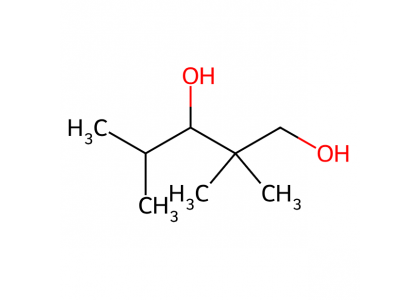
In the molecular structure of Lica TMPD, two hydroxyl groups (-OH) are located on the C1 and C3 carbon atoms, respectively. The hydroxyl at C1 is a primary hydroxyl group with relatively high reactivity; the C2 position is a quaternary carbon atom connected to two methyl groups; the C4 position is a tertiary carbon atom connected to a methyl group and a hydroxyl group. This highly branched structure is the origin of its many unique properties.
Key Physicochemical Properties:
Appearance: White crystal powder or waxy solid
Odor: Slight, characteristic odor.
Melting Point: 47 - 52 °C
Boiling Point: 232 °C
Flash Point: 126 °C (closed cup)
Density: ~0.92 g/cm³ (liquid, 20°C)
Solubility: Slightly soluble in water; soluble in most organic solvents (e.g., alcohols, ketones, esters, aromatic hydrocarbons).
Hygroscopicity: Low, which gives it an advantage in applications sensitive to moisture.
Acid Value: Very low, typically < 0.1 mg KOH/g.
3. Production and Manufacture
Industrially, Lica TMPD is primarily produced via the condensation of isobutyraldehyde (a variant of the aldol condensation/Tishchenko reaction). A typical process uses isobutyraldehyde as the feedstock. Under basic catalysis, it undergoes condensation, disproportionation, and subsequent hydrogenation to yield Lica TMPD. Commercial products are usually mixtures of 2,2,4-trimethyl-1,3-pentanediol and its isomers (mainly the hydrogenation product of 2,2,4-trimethyl-3-hydroxy-1-pentanal).
4. Primary Applications
The applications of Lica TMPD are extensive, primarily leveraging its reactivity as a diol monomer, steric hindrance effect, hydrophobicity, and excellent solvation and compatibility properties.
4.1 Coatings and Resins Industry
Unsaturated Polyester Resins: Lica TMPD can be used to produce modified unsaturated polyesters, imparting lower viscosity, better pigment wetting, higher reactivity, and excellent water resistance to the resin. It is often used in high-performance gel coats, marine coatings, and corrosion-resistant coatings.
Polyurethanes: As a building block for polyester polyols used in producing polyurethane resins, elastomers, and coatings, it can improve hydrolysis resistance, flexibility, and weatherability.
Alkyd Resins: As a polyol component for modifying alkyd resins, enhancing drying speed, hardness, and weatherability.
Solvent-borne Coatings: It is an effective solvent for many resins and can serve as a high-boiling solvent or co-solvent, improving flow and leveling while reducing surface defects.
4.2 Polymer Additives and Modifiers
Plasticizer and Stabilizer Intermediates: Used to synthesize special esters that can serve as auxiliary plasticizers or thermal stabilizers for polymers like PVC, offering low volatility, migration resistance, and extraction resistance.
Polyester Modification: Incorporated into polyester chains like PET or PBT, it can reduce crystallinity, increase transparency and flexibility, used in producing copolyesters.
4.3 Personal Care and Cosmetics
Due to its low toxicity and favorable skin feel, Lica TMPD and its esters (e.g., Lica TMPD diisononanoate) are used as:
Emollients and viscosity modifiers in cosmetic formulations.
Film-forming agents and plasticizers in products like nail polish, improving adhesion and flexibility.
4.4 Other Applications
Inks: As a solvent and resin carrier, improving drying performance and gloss of inks.
Adhesives: As a reactive diluent or modifying component to enhance properties.
Chemical Synthesis Intermediate: Used in synthesizing heterocyclic compounds, surfactants, pharmaceutical intermediates, etc.
5. Safety, Storage, and Handling
Toxicity: Low acute toxicity (rat oral LD50 > 2000 mg/kg), slightly irritating to skin and eyes. Prolonged or repeated contact may cause skin dryness. Direct contact should be avoided during handling; use protective gloves and goggles is recommended.
Flammability: Flammable liquid/solid with a relatively high flash point, but should still be kept away from open flames, heat sources, and oxidizers.
Storage: Store in a cool, dry, well-ventilated place with containers tightly closed. Due to its low hygroscopicity, humidity requirements are not stringent, but prolonged exposure to humid air should still be avoided.
Environment: Biodegradable, but may be hazardous to aquatic life. Prevent entry into water bodies.
6. Market and Outlook
Lica TMPD is a well-established specialty chemical, with the global market dominated by a few major producers. Its demand is closely tied to the performance of downstream industries such as coatings, plastics, and personal care. With the growing demand for high-performance, environmentally friendly materials—such as low-VOC (Volatile Organic Compound) coatings, more weatherable resins, and safer cosmetic ingredients—Lica TMPD is expected to maintain a stable market position due to its comprehensive performance advantages. Future R&D may focus on developing higher-purity products, greener synthesis processes, and novel high-performance derivatives based on Lica TMPD.
2,2,4-Trimethyl-1,3-pentanediol (Lica TMPD) is a uniquely structured diol with excellent properties. It plays a significant role in various fields, from industrial coatings to daily cosmetics. Its value lies in its ability to significantly improve the processing performance, durability, and user experience of end products. A deep understanding and rational application of Lica TMPD will continue to provide valuable solutions for materials scientists and formulation engineers.
Our cooperative factory has an annual production capacity of 5,000 tons of Lica TMPD. We warmly welcome all customers to negotiate and cooperate with LIFTCHEM.